The 15 Best Fleet Management Software for 2026
We analyzed 15 fleet management platforms on tracking, safety, maintenance, pricing, and support to help you pick the right one.
Whether you manage a five-truck plumbing company or a 500-vehicle logistics operation, your fleet management software shapes how efficiently you track assets, schedule maintenance, stay compliant, and keep drivers safe. The market in 2026 is crowded, with platforms increasingly bundling AI dashcams, predictive analytics, and ELD compliance into unified systems. This guide is for fleet managers, operations directors, and business owners who need to cut through vendor marketing and find software that actually fits their fleet size, industry, and budget.
Our editorial team analyzed 15 fleet management products using vendor documentation, published pricing, feature specifications, and patterns across thousands of user reviews. We did not hands-on test every product; instead, we looked for consistency across data points, including where vendors' claims aligned (or conflicted) with real user experiences. We weighted pricing transparency, contract flexibility, support quality, and feature depth equally, because a powerful platform you can never get help with is not a good platform.
Below, you will find our ranked picks, a segment-by-segment buyer's guide, and a comparison table to help you build a shortlist of two or three products to demo. We recommend filtering first by fleet size and industry, then by budget and contract tolerance. Every product links to a full individual review with deeper analysis.
The Top 15 Picks, at a Glance
Our ranked shortlist. Click any row to jump to the full analysis.
Which One Fits You?
Not every product serves every team. Here's where to start by company size.
Small
For small teams (under 50 employees)
At this size, you are likely managing 5 to 50 vehicles and cannot afford to overpay per unit or lock into multi-year contracts that outlast your planning horizon. Prioritize month-to-month pricing, quick self-install hardware, and responsive support you can reach by phone. Avoid platforms that gate essential features (work orders, integrations, dashcams) behind expensive tiers; what looks cheap at the base price often is not once you add what you actually need.
Growth
For growing companies (50-500 employees)
Growing fleets need platforms that scale without forcing a full re-implementation at 100 or 200 vehicles. Look for unlimited-user pricing, automated maintenance scheduling, and integrations with your existing fuel cards, accounting software, and telematics hardware. This is the segment where total cost of ownership matters most: a $4 per vehicle tool plus a $20 per vehicle telematics add-on may still beat a $40 per vehicle all-in-one with a three-year lock-in.
Enterprise
For large organizations (500+ employees)
Enterprise fleets managing hundreds or thousands of vehicles need unified data across telematics, video, compliance, maintenance, and analytics. A fragmented vendor stack creates reporting gaps and duplicate data entry that compounds at scale. Negotiate contract terms aggressively (Samsara's three-year lock-in and Lytx's reported termination fees are real financial risks), and require a dedicated account manager as part of the deal.
The Detailed List
What each product does well, where it falls short, and who it fits.
Samsara
Samsara earns the top spot for its sheer breadth: per-second GPS tracking, AI dash cameras with real-time in-cab alerts, ELD compliance, maintenance tools, and 350+ integrations in one platform. The interface is genuinely intuitive, which matters when you are onboarding dispatchers and managers. The catch is a mandatory three-year contract and premium pricing (estimated $27 to $60 per vehicle per month depending on features), so it fits best when your fleet is large enough to absorb those costs.
- Starting at
- Contact vendor for pricing (third-party sources estimate $27-$33/vehicle/month for core telematics)
- Founded
- 2015
- HQ
- San Francisco, CA
- Model
- Per User
What's great
- Best-in-class interface with intuitive dashboard that dispatchers and managers can learn quickly
- Per-second GPS tracking provides near-live vehicle positions, faster than most competitors
- AI dash cameras with real-time in-cab alerts for distraction, drowsiness, and dangerous driving reduce accident frequency and liability
- Comprehensive all-in-one platform covering tracking, safety, maintenance, fuel, compliance, and coaching eliminates the need for multiple tools
What's not
- Mandatory three-year contract with full remaining balance as early termination fee and no mid-contract vehicle removal
- Premium pricing ($40-$60/vehicle/month with full features) is expensive for small fleets under 20 vehicles
- Level 1 support often cannot resolve technical issues on first contact, with escalations taking days
- Add-on pricing model means costs escalate as you enable additional features beyond basic GPS tracking
Fleetio
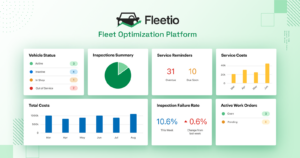
Fleetio is the strongest value in fleet maintenance management, starting at just $4 per vehicle per month with unlimited users on every plan. Its 110,000+ shop network and automated preventive maintenance scheduling have helped fleets report an average 12% reduction in maintenance costs. It lacks built-in GPS tracking and route planning, so you will need a telematics integration, but for centralizing maintenance, inspections, fuel tracking, and parts inventory, nothing else at this price comes close.
- Starting at
- $4/vehicle/month
- Founded
- 2012
- HQ
- Birmingham, AL
- Model
- Tiered
What's great
- Transparent, affordable pricing starting at $4/vehicle/month with unlimited users on all plans
- Strong maintenance management with automated scheduling, 110,000+ shop network, and 12% average maintenance cost reduction
- Intuitive interface with minimal learning curve for drivers, mechanics, and fleet managers
- AI-powered tools (Smart Uploads, AI Service Advisor) that meaningfully reduce manual data entry and improve approval workflows
What's not
- Work orders, integrations, and outsourced maintenance are gated behind the Professional plan ($7/vehicle/month), making the Essential plan too limited for most fleets
- No route planning, driver performance scoring, or built-in GPS tracking; requires telematics integrations for those capabilities
- Reporting lacks advanced data visualization; large datasets can cause slow load times
- No 24/7 customer support; phone and chat limited to weekdays 8 AM to 8 PM Eastern
ClearPathGPS
At $20 to $25 per vehicle per month with no long-term contracts and a 30-day money-back guarantee, ClearPathGPS removes the financial risk that plagues most fleet tracking purchases. Its U.S.-based support team consistently earns praise for hands-on onboarding, and the interface is clean enough that drivers and dispatchers pick it up quickly. The integration library is small compared to Samsara or Motive, so enterprises needing ERP connectivity should look elsewhere.
- Starting at
- $20/vehicle/month
- Founded
- 2013
- HQ
- Santa Barbara, CA
- Model
- Per User
What's great
- Highly affordable pricing at $20-$25/vehicle/month with no long-term contracts and a 30-day money-back guarantee
- Exceptional U.S.-based customer support with hands-on onboarding and training during setup
- Clean, intuitive interface across web platform and mobile apps that requires minimal training
- Flexible hardware options including self-installing Plug & Play OBD-II device and six tracker types for different use cases
What's not
- Limited report customization and weekly reports can be difficult to parse, particularly time-between-jobs data
- Basic geofencing with simple perimeter alerts only; lacks advanced event triggers or complex automation rules
- Small integration library compared to competitors like Samsara or Motive; minimal ERP connectivity
- 30-second location refresh rate is slower than competitors offering 10- to 15-second intervals

Onfleet
Onfleet is purpose-built for last-mile delivery, with AI route optimization trained on over 400 million deliveries and unlimited drivers and dispatchers on all plans. Its RESTful API is among the best-documented in the category, making it a strong fit for teams that need deep custom integrations with e-commerce or order management systems. The $500-plus monthly entry point (plus separate SMS charges) makes it hard to justify below 2,000 deliveries per month, but high-volume operations get excellent per-delivery economics.
- Starting at
- ~$500/month (Launch plan; exact pricing varies, confirm with vendor)
- Founded
- 2015
- HQ
- San Francisco, CA
- Model
- Tiered
What's great
- Unlimited drivers and dispatchers on all plans, making per-user cost very low for large teams
- AI route optimization trained on 400M+ deliveries produces highly accurate ETAs and efficient routes
- Excellent RESTful API with comprehensive developer documentation enables deep custom integrations
- Intuitive interface for both dispatchers and drivers, with minimal onboarding time required
What's not
- Expensive entry point at $500+/month, plus separate SMS/telephony charges, making it hard to justify for low-volume operations
- No mobile-native dispatcher dashboard; dispatch management requires a desktop browser
- Analytics are basic: no historical route playback, and data retention is limited on lower-tier plans (90 days on Launch)
- Intermittent performance issues reported, including slow driver location updates and the need for occasional page reloads
GPS Insight
GPS Insight delivers 60+ report templates covering speed, idling, fuel, mileage, and compliance at a starting price around $15 per vehicle per month, well below Samsara or Verizon Connect. Hardware installation is straightforward, and fleet managers report minimal onboarding friction. Persistent billing complaints and the lack of predictive maintenance analytics are real drawbacks; verify your cancellation terms in writing before signing.
- Starting at
- Contact vendor for pricing (third-party sources report ~$14.95/vehicle/month for basic tracking)
- Founded
- 2004
- HQ
- Scottsdale, AZ
- Model
- Per User
What's great
- Low starting price (~$15/vehicle/month) significantly undercuts major competitors like Samsara, Verizon Connect, and Motive
- Strong reporting suite with 60+ templates covering speed, idling, mileage, fuel, engine health, and compliance
- User-friendly interface with easy hardware installation and minimal onboarding friction for new fleet managers
- FMCSA-certified ELD solution with HOS, eDVIR, and IFTA support, rated among the best ELD devices in testing comparisons
What's not
- No predictive maintenance analytics; the platform tracks scheduled service but cannot forecast failures before they happen
- Persistent billing and accounting complaints including overcharges, difficulty reaching the billing department, and charges continuing after cancellation
- Essential features like ELD compliance and dashcams are paid add-ons, pushing total costs toward competitor levels when fully configured
- No free trial available; only free demos are offered
IntelliShift
IntelliShift unifies telematics, AI video, inspections, maintenance, and compliance in one modular system, eliminating the data silos that plague multi-vendor setups. Its Operations IQ analytics module offers drag-and-drop dashboards with machine learning insights, which is a differentiator for data-driven fleet operations. However, mandatory 36-to-60-month contracts and inconsistent GPS accuracy are notable risks; request a pilot period and verify location data quality for your routes before committing.
- Starting at
- Contact vendor for pricing
- Founded
- 2002
- HQ
- Commack, NY
- Model
- Per User
What's great
- Unified platform eliminates data silos by connecting telematics, video, inspections, maintenance, and compliance in a single system
- Operations IQ analytics module delivers customizable dashboards with drag-and-drop report building and machine learning-driven insights
- Competitive pricing at approximately $15-20/vehicle/month for larger fleets, significantly lower than Samsara, Verizon Connect, and Motive
- Strong integration ecosystem including ERP connections (JD Edwards, Trimble), fuel cards, construction tools (Procore), and an open API for custom builds
What's not
- GPS location accuracy and estimated arrival times are frequently inaccurate, with stop reports showing unreliable data
- Mandatory 36-60 month contract terms with no month-to-month option, creating significant vendor lock-in risk
- Customer support quality is inconsistent; experience varies heavily depending on the assigned customer success manager
- Mobile app is essentially a repackaged version of the web interface with synchronization delays rather than a purpose-built mobile experience
Lytx
Lytx has 27 years of driving data behind its AI, which identifies over 100 unsafe behaviors and delivers structured coaching workflows with video evidence. Its dashcam hardware (HD, night vision, 360-degree views, 400 hours of recording) is the most capable we found in our analysis. Completely opaque pricing and reported early termination fees as high as $45,000 mean you need to negotiate carefully, but for safety-critical fleets where accident reduction has direct P&L impact, Lytx remains the category leader in video telematics.
- Starting at
- Contact vendor for pricing
- Founded
- 1998
- HQ
- San Diego, CA
- Model
- Custom
What's great
- Industry-leading AI risk detection identifies 100+ unsafe driving behaviors with real-time in-cab alerts
- Structured driver coaching workflows with video evidence and customizable scorecards deliver measurable accident reductions
- Advanced dashcam hardware supports HD video, night vision, 360-degree views, live streaming, and up to 400 hours of continuous recording
- Over 25 years of driving data (120+ billion miles analyzed) powers increasingly accurate machine learning models
What's not
- Pricing is completely opaque with no published rates; all plans require custom quotes, making comparison shopping difficult
- Long-term contracts with potentially steep early termination fees (reported as high as $45,000) create significant financial risk
- AI generates false positives frequently enough to frustrate drivers and undermine trust in the system
- Customer support quality is highly inconsistent, with reports ranging from excellent to weeks-long response times
Rhino Fleet Tracking
Rhino Fleet Tracking is built for small operators who want month-to-month GPS tracking without the enterprise overhead. At $13.99 per device per month with no contracts, it is among the most affordable options we reviewed, and its U.S.-based phone support is consistently praised. The default two-minute GPS refresh rate and a very limited integration ecosystem (Fleetio, Google Maps, and select fuel cards) mean it suits basic tracking needs rather than complex fleet intelligence.
- Starting at
- $13.99/device/month (per vendor website; actual pricing varies by fleet size and plan tier)
- Founded
- 2007
- HQ
- Argyle, Texas
- Model
- Per User
What's great
- No long-term contracts required; all plans are month-to-month, making it ideal for seasonal businesses or those unwilling to commit to multi-year deals
- Affordable pricing starting as low as $13.99/device/month, significantly undercutting enterprise competitors like Samsara and Verizon Connect
- Highly responsive, US-based customer support with live phone assistance consistently praised across customer feedback
- Easy self-installation for OBD-II plug-in devices with no tools or professional help required
What's not
- Default GPS refresh rate of every 2 minutes (adjustable to 30 seconds) is slower than enterprise competitors offering near-real-time updates
- Limited integration ecosystem with only Fleetio, Google Maps, and fuel card (ExxonMobil/Wex) connections natively supported
- ELD/HOS compliance capabilities are poorly documented and disputed by independent reviewers; not reliable for FMCSA-critical operations without vendor confirmation
- Driver management and safety coaching features are basic compared to platforms offering structured coaching workflows and gamification
Teletrac Navman
Teletrac Navman stands out for construction and mixed fleets with engine-hours-based maintenance scheduling, non-powered asset tracking via solar-powered devices, and geofencing for job sites. Its AI-powered natural language search lets managers query fleet data conversationally rather than wrestling with report builders. The one-minute GPS refresh rate lags behind competitors, and post-sale support can be slow (five-plus business days for email responses), so it works best for teams with some internal technical capacity.
- Starting at
- Contact vendor for pricing (third-party sources estimate ~$25/vehicle/month)
- Founded
- 1988
- HQ
- Northbrook, Illinois
- Model
- Custom
What's great
- Exceptional maintenance management with engine-hours-based scheduling, digital inspections, and automatic maintenance event creation from failed inspection items
- Strong construction and mixed fleet capabilities including non-powered asset tracking, solar-powered trackers, and geofencing for job sites
- AI-powered analytics with natural language search allow fleet managers to query data conversationally rather than building manual reports
- Comprehensive driver safety suite combining AI dashcams, driver scorecards, fatigue management, and seat belt detection in one platform
What's not
- Post-sale customer support is inconsistent; email responses can take five or more business days, and some customers report needing daily calls to resolve technical issues
- Interface feels dated compared to Samsara and Motive, with slower page load times and a steeper learning curve for reporting and analytics
- One-minute GPS tracking refresh rate is significantly slower than Geotab (15 seconds) and Motive (3 seconds)
- Driver app (Teletrac DRIVE) is Android-only with no iOS version, forcing fleets to provide separate devices or use a Garmin tablet
Omnitracs
Omnitracs offers one of the deepest feature sets in the category, spanning ELD compliance, routing, video safety, fuel tax, tire health monitoring, and predictive analytics under one roof. Free installation and standard one-year contracts (versus the two-to-three-year minimums common elsewhere) are genuine advantages. Customer support quality has declined significantly, with reports of multi-hour wait times and an F rating from the Better Business Bureau; budget for internal admin resources if you choose this platform.
- Starting at
- Contact vendor for pricing (third-party sources list plans starting around $22.95/vehicle/month)
- Founded
- 1988
- HQ
- Dallas, TX
- Model
- Custom
What's great
- One of the most comprehensive feature sets in fleet management, covering ELD compliance, routing, video safety, telematics, fuel tax, and predictive analytics in a single platform
- Top-tier GPS tracking and real-time fleet visibility with granular data on fuel, idle time, tire health, and vehicle diagnostics
- Free installation included and one-year contracts standard, while many competitors charge for installation and require two-to-three-year commitments
- AI-powered video safety with automated critical event detection and cloud storage enables proactive driver coaching
What's not
- Customer support quality has severely declined, with reports of 7-8 hour wait times, unresponsive account managers, and an F rating from the Better Business Bureau
- Administrative interface is dated and clunky, with a steep learning curve that requires dedicated IT staff to manage effectively
- Pricing is completely opaque with no published rates, making budgeting difficult and negotiations one-sided
- Confusing product portfolio with multiple overlapping platforms (One, XRS, IVG, RDC, Drive) that can create confusion when adding vehicles or features
Verizon Connect
Verizon Connect covers nearly every fleet management function: GPS tracking, AI dashcams, ELD compliance, field service dispatch, EV monitoring, and carbon footprint reporting that goes deeper than most competitors. The browser-based interface is modern and well-designed. But a rigid 36-month auto-renewing contract, opaque pricing with many paid add-ons, and persistently poor customer service (long hold times, unresolved billing disputes) mean you should only proceed if your organization has dedicated fleet management staff to handle vendor friction.
- Starting at
- Contact vendor for pricing (third-party sources report ~$20-$40/vehicle/month)
- Founded
- 2018
- HQ
- Atlanta, GA
- Model
- Per User
What's great
- One of the most comprehensive fleet management feature sets available, covering GPS tracking, dashcams, ELD compliance, field service, EV monitoring, and carbon footprint reporting
- Modern, intuitive browser-based interface with no function more than one or two clicks away and a well-designed live map dashboard
- Fuel and carbon footprint reporting is more extensive than most competitors, including Samsara
- Strong government fleet credentials with GSA approval, Sourcewell contracts, and established public-sector customer base
What's not
- Customer service is consistently poor: long hold times, unreturned calls, unanswered emails, and unresolved billing issues are pervasive complaints
- Rigid 36-month minimum contract with auto-renewal and full-balance early termination fees locks businesses into a long commitment
- Opaque, quote-based pricing makes it difficult to compare costs, and many core features like dashcams and route optimization are paid add-ons
- Contract cancellation process is extremely difficult, with multiple customers reporting the need to file BBB complaints to get a response
Linxup
Linxup offers a 30-second OBD-II plug-in install and mileage-based maintenance scheduling at around $22.99 per device per month, making it a practical starter tracker for small fleets. DTC engine code reading and service history tracking add more depth than you would expect at this price. The 60-second GPS refresh rate, lack of dispatch or route optimization, and inconsistent support quality limit its ceiling; treat it as a focused tracking and maintenance tool, not a full fleet management platform.
- Starting at
- $22.99/device/month
- Founded
- 2004
- HQ
- Chesterfield, Missouri
- Model
- Per User
What's great
- Competitive pricing starting around $22.99/month per device, undercutting most full-featured competitors
- Strong maintenance management with mileage-based scheduling, DTC engine code reading, and comprehensive service history tracking
- Quick hardware installation (OBD-II plug-in takes as little as 30 seconds) with no professional setup required
- Clean, Google Maps-based interface that is easy to learn for non-technical fleet managers
What's not
- No dispatch management, route optimization, or two-way driver messaging, features most competitors now include
- 60-second GPS refresh rate is significantly slower than Motive (1-3 seconds), Verizon Connect (30 seconds), and Azuga (30 seconds)
- Inconsistent customer support quality with reports of 24-hour callback delays, unresponsive channels, and uneven representative training
- Contract auto-renewal and aggressive early termination fee enforcement generate frequent billing complaints
NexTraq
NexTraq (owned by Michelin Group) bundles dashcams, in-cab buzzers, DVIRs, and 40-plus driver training courses into one platform, with no minimum vehicle requirement. Customizable GPS refresh rates (30 seconds to 15 minutes) provide flexibility most competitors lack. Three-year auto-renewing contracts with reported termination fees of $3,200 to $3,400, combined with consistently poor support reviews, make the commitment risky; negotiate clear exit terms before signing.
- Starting at
- Contact vendor for pricing
- Founded
- 2000
- HQ
- Atlanta, Georgia
- Model
- Per User
What's great
- Comprehensive driver safety suite including dashcams, in-cab buzzers, DVIRs, and 40+ training courses
- No minimum vehicle requirement, making it accessible to fleets as small as two vehicles
- Customizable GPS refresh rate (30 seconds to 15 minutes) provides flexibility other platforms lack
- Free hardware installation through a nationwide installer network
What's not
- Customer support is consistently described as slow, unhelpful, and in some cases confrontational
- Three-year auto-renewing contracts with early termination fees reported at $3,200 to $3,400
- Pricing is completely opaque; no published rates, requiring sales contact for any quote
- No 24/7 support; limited to weekday and partial Saturday hours, leaving overnight and Sunday fleets uncovered
Fleet Complete
Fleet Complete (now Powerfleet) is the strongest option for Canadian fleets needing native ELD compliance with both U.S. FMCSA and Canadian regulations, backed by 20-plus years of regulatory experience. Its asset tracking for trailers, generators, and construction equipment is comprehensive. A dated, cluttered interface, software lag affecting GPS and ELD functions, and consistently slow support (hardware replacements stretching past a month) keep it from competing with higher-rated platforms outside the Canadian compliance niche.
- Starting at
- Contact vendor for pricing (third-party estimates suggest ~$20-$30/vehicle/month for base GPS tracking)
- Founded
- 2000
- HQ
- Toronto, Ontario, Canada
- Model
- Per User
What's great
- Strong Canadian ELD compliance with 20+ years of regulatory experience, supporting both US FMCSA and Canadian regulations natively
- Accurate real-time GPS tracking with Google Maps/Street View integration and useful breadcrumb trail history
- Comprehensive asset tracking for non-vehicle equipment like trailers, generators, and construction machinery
- Quick initial setup and installation, especially through TELUS and AT&T partner channels with pre-configured hardware
What's not
- Customer support is consistently slow and unreliable, with unresolved tickets, long phone queues, and hardware replacement timelines stretching over a month
- User interface is dated and cluttered, with overlapping elements and unintuitive navigation that increase the learning curve
- Software lag affects GPS tracking, reporting, ETAs, and ELD functions, reducing real-time reliability
- VisionAI dashcam video recording is buggy and laggy, with footage sometimes arriving too late for useful incident analysis
ITS Dispatch
ITS Dispatch is a dispatching tool aimed at small and midsize carriers and brokers, automating manual dispatch tasks in a cloud-based interface. We were unable to verify pricing, feature depth, or user feedback with enough confidence to provide a detailed editorial assessment. If your primary need is dispatch automation for a small carrier, it may be worth requesting a demo, but we recommend comparing it against Onfleet or Samsara's dispatch modules before committing.
What's great
What's not
How We Evaluated
We analyzed 15 fleet management products using vendor-published documentation, publicly available pricing, feature specifications, and user feedback patterns across major review platforms. We did not conduct hands-on testing of every product; our assessments are based on cross-referencing multiple data sources to identify where vendor claims align with actual user experiences. Products were scored on feature depth, pricing transparency, contract flexibility, support quality, and segment fit. Ratings and rankings reflect our editorial judgment as of May 2026 and will be updated as vendors release significant product changes.
Common Questions
Straight answers to what buyers ask us.
-
Prices range widely, from $4 per vehicle per month (Fleetio's Essential plan) to $40 to $60 per vehicle per month for fully loaded platforms like Samsara with AI dashcams and compliance tools. Most mid-range GPS tracking platforms fall between $15 and $25 per vehicle per month. Always confirm whether dashcams, ELD modules, and route optimization are included or sold as add-ons, because those extras can double the base price.
-
Most fleet management platforms require hardware: either an OBD-II plug-in device, a hardwired tracker, or a dashcam unit. Some vendors like Rhino Fleet Tracking and Linxup use simple plug-in devices you can install yourself in under a minute. Platforms like Fleetio focus purely on software and rely on integrations with third-party telematics providers for GPS data.
-
Unfortunately, yes. Samsara requires three years, IntelliShift locks you in for 36 to 60 months, and Verizon Connect auto-renews at 36 months. Contract-free options exist (ClearPathGPS, Rhino Fleet Tracking), but they tend to offer fewer advanced features. If you do sign a multi-year deal, negotiate the early termination clause line by line; reported penalties range from a few thousand dollars to over $45,000.
-
Fleet tracking focuses on GPS location, geofencing, and basic driver behavior monitoring. Fleet management is broader, adding maintenance scheduling, compliance (ELD, DVIR, IFTA), route optimization, fuel analytics, and sometimes dispatch. If you only need to know where your vehicles are, a tracking tool like ClearPathGPS or Rhino will do. If you need to manage the full vehicle lifecycle, look at Fleetio, Samsara, or IntelliShift.
-
AI dashcams are increasingly central to fleet safety programs. Samsara and Lytx both use AI to detect distracted driving, drowsiness, and following distance in real time, triggering in-cab alerts before an incident occurs. Fleets using these systems consistently report reduced accident rates and lower insurance premiums. However, false positives remain a common complaint (especially with Lytx), so plan for a calibration period and clear communication with drivers about how footage is used.
-
Yes. Samsara, Omnitracs, GPS Insight, Lytx, NexTraq, and Fleet Complete all offer ELD compliance tools, though some sell them as paid add-ons rather than including them in the base plan. Fleet Complete is particularly strong for Canadian fleets needing dual U.S./Canadian regulatory compliance. Always verify that the ELD module is FMCSA-registered and self-certified; not all vendor claims hold up under audit.
-
If you track trailers, generators, or construction equipment alongside vehicles, you need a platform with dedicated asset tracking. Teletrac Navman offers solar-powered trackers for non-powered assets and engine-hours-based maintenance scheduling. Fleet Complete and IntelliShift also support mixed fleets. Avoid vehicle-only platforms unless you are comfortable managing assets in a separate system.