The 15 Best HRMS Software for 2026
We analyzed 157 HRMS platforms so you can find the right one for your team, your budget, and your complexity.
If you manage people, you need HR software that actually works. Whether you're running payroll for a 20-person startup or coordinating benefits across 15 countries, the HRMS market has exploded with options. The problem is that most of these platforms look the same on their marketing pages. This guide cuts through the noise.
Our editorial team analyzed 157 HRMS products across vendor documentation, pricing structures, feature depth, deployment models, and user feedback patterns from every major review platform. We did not hands-on test all 157 products. What we did do is weight real-world adoption signals, pricing transparency, and how well each platform serves its stated audience. The result is an honest ranking you can actually use to make a decision.
Below, you will find our top 15 picks ranked editorially, a buyer's guide segmented by company size, and answers to the questions we see most often from HR leaders shopping for software. Use the comparison table to narrow your shortlist, then read the individual verdicts to understand the trade-offs.
The Top 15 Picks, at a Glance
Our ranked shortlist. Click any row to jump to the full analysis.
Which One Fits You?
Not every product serves every team. Here's where to start by company size.
Small
For small teams (under 50 employees)
At this size, you need software that works out of the box without a multi-week implementation. Transparent pricing matters because your budget is fixed; hidden add-ons hurt disproportionately. Prioritize payroll accuracy, benefits administration (if US-based), and an interface simple enough that your office manager or founder can run it without HR training.
Growth
For growing companies (50-500 employees)
This is where fragmented tools start breaking down. You are likely juggling separate systems for payroll, time tracking, performance reviews, and benefits. Look for platforms that unify at least three of those functions on a single database. Pay close attention to integration ecosystems and whether the vendor can grow with you to 500+ employees without forcing a migration.
Enterprise
For large organizations (500+ employees)
At scale, the questions shift from features to architecture. You need multi-country compliance, configurable workflows for complex org structures, and analytics sophisticated enough to inform workforce planning. Budget for implementation costs that may equal or exceed your first year of software licensing. Dedicated HRIS staff are not optional; they are a prerequisite for platforms at this tier.
The Detailed List
What each product does well, where it falls short, and who it fits.
Rippling
Rippling is the most complete workforce platform we analyzed, connecting HR, IT, and finance through a single data model. Automated onboarding that provisions apps, devices, payroll, and benefits simultaneously is a genuine differentiator, and 600+ integrations make it a realistic central hub. Modular pricing is opaque and compounds fast (budget beyond the $8/employee/month base), but for growing companies with 20 to 1,000 employees, nothing else unifies this many functions this well.
- Starting at
- $8/employee/month (base platform; modules additional; custom quote required)
- Founded
- 2016
- HQ
- San Francisco, CA
- Model
- Per User
What's great
- Unified platform spanning HR, IT, and finance eliminates duplicate data entry and fragmented tools
- Exceptionally fast onboarding and offboarding that automatically provisions apps, devices, payroll, and benefits
- 600+ integrations with SSO, SAML, and SCIM support make it a genuine central hub for your software stack
- Workflow Studio enables powerful cross-module automation without coding
What's not
- Modular pricing is opaque and compounds quickly; total costs are difficult to predict without a sales quote
- Phone support restricted to accounts with 150+ employees; chat-only support for most customers
- Help center requires login, preventing evaluation of support resources before purchase
- Occasional payroll processing glitches reported, including payment delays and tax calculation errors
BambooHR
BambooHR consistently earns the highest usability marks of any HRMS we analyzed, and that matters more than most buyers realize. High employee adoption means your HR data is actually accurate. The 150+ integrations, open REST API, and onboarding workflows that launch in under an hour make it a fast win. Just know that payroll, time tracking, and benefits are paid add-ons that can inflate costs 30-50% above the base price.
- Starting at
- Contact vendor for pricing (flat rate from $250/month for ≤25 employees; third-party estimates suggest ~$10/employee/month for the Core plan)
- Founded
- 2008
- HQ
- Lindon, Utah
- Model
- Per User
What's great
- Exceptionally intuitive, clean interface that drives high employee adoption rates across all levels of technical ability
- Strong onboarding workflows with automated task assignment, electronic signatures, and pre-boarding capabilities that can be set up in under an hour
- 150+ marketplace integrations plus a free, open REST API available on all plans for custom connections
- Solid performance management suite on Pro plan including 360-degree reviews, goal tracking, eNPS, and Mercer-powered salary benchmarking
What's not
- Pricing is completely opaque; you must contact sales for a quote, making comparison shopping difficult
- Payroll and benefits administration are paid add-ons and US-only, limiting value for international companies
- Add-on pricing structure (payroll, time tracking, benefits) can inflate total cost 30-50% above the base plan price
- Reporting and analytics are basic on Core and Pro plans; advanced visualization requires the Elite tier
Workday HCM
Workday HCM is the platform 65% of the Fortune 500 runs on, and for good reason. Its single-codebase architecture, Skills Cloud, and embedded AI deliver workforce intelligence most competitors lack natively. Implementation routinely costs $2M to $20M+ and takes 6 to 12 months, so this is exclusively for organizations with 1,000+ employees and dedicated HRIS staff. For that audience, it remains the benchmark.
- Starting at
- Contact vendor for pricing
- Founded
- 2005
- HQ
- Pleasanton, California
- Model
- Custom
What's great
- Single-codebase architecture with a unified data model ensures consistency across all HR, payroll, talent, and analytics modules
- Skills Cloud and embedded AI provide advanced workforce intelligence capabilities that most competitors lack natively
- Scales effectively for multinational organizations managing complex structures across multiple countries and regulatory environments
- Workday Integration Cloud is included at no additional cost, eliminating the need for separate middleware
What's not
- No public pricing; total cost of ownership (software plus implementation) routinely reaches seven figures, making it prohibitive for most mid-market companies
- Implementation is complex, typically requiring 6 to 12 months and expensive consulting partners ($2M to $20M+ for implementation alone)
- Navigation requires excessive clicks for routine tasks like booking leave or updating records, a consistent pain point
- UI feels dated in some areas and lacks basic customization options like dark mode or custom themes
Leapsome
Leapsome combines HRIS, performance reviews, OKRs, engagement surveys, learning, and compensation management in one platform, and its AI features (review drafting, survey analysis, goal generation) are ahead of most competitors. Configurable review cycles support annual, quarterly, project-based, and 360-degree formats. Modular pricing adds up quickly for mid-sized teams, and there is no native mobile app; but for knowledge-work organizations with 50 to 1,000 employees consolidating people tools, it delivers strong value.
- Starting at
- Contact vendor for pricing (third-party sources estimate ~$8/user/month)
- Founded
- 2016
- HQ
- New York, NY and Berlin, Germany
- Model
- Per User
What's great
- Comprehensive all-in-one platform combining HRIS, performance reviews, OKRs, engagement surveys, learning, and compensation in a single system
- AI capabilities are ahead of most competitors, particularly for review drafting, survey analysis, and goal generation
- Highly configurable review cycles with support for annual, quarterly, project-based, 360-degree, and continuous feedback
- Strong integration ecosystem with major HRIS platforms, ATS tools, Slack, Microsoft Teams, and API/Zapier support
What's not
- Modular pricing becomes expensive quickly for mid-sized teams needing multiple modules, with significant gap between starting price and total cost
- Steep learning curve due to the breadth of features; requires significant upfront configuration effort for review templates and competency frameworks
- No dedicated iOS or Android mobile app; mobile experience limited to responsive web interface
- Learning and development module is functional but basic compared to dedicated LMS platforms

OnPay
OnPay wins on transparency: $49/month plus $6/employee/month, one plan, all features included, no upsells. The error-free tax accuracy guarantee (OnPay pays IRS penalties for their mistakes) and multi-state payroll at no extra charge are standouts for US small businesses. No built-in time tracking and a limited integration ecosystem are real gaps, but for companies under 150 employees that want reliable payroll without surprises on the invoice, OnPay is the clearest value.
- Starting at
- $49/month + $6/employee/month
- Founded
- 2015
- HQ
- Atlanta, GA
- Model
- Flat Rate
What's great
- Single-plan pricing includes all features with no upsells, tiers, or hidden fees
- Error-free tax accuracy guarantee where OnPay pays IRS penalties for their mistakes
- Multi-state payroll processing included at no extra charge
- Licensed insurance broker in all 50 states for health insurance, workers' comp, and disability
What's not
- No built-in time tracking or scheduling; requires a separate tool and integration
- Limited integration ecosystem compared to competitors like Rippling or Gusto
- No dedicated employer-side mobile app for running payroll on the go
- US-only platform with no international or global payroll capabilities
Paycom
Paycom's true single-database architecture eliminates the sync issues that plague platforms stitched together through acquisitions. Its Beti feature, which shifts payroll verification to employees, reportedly reduces processing time by up to 90%. The self-service portal supports multiple languages and works well on mobile. Pricing is premium and not publicly listed, integrations are limited by design, and the learning curve is steep. But for US mid-market companies (50-750+ employees) that want everything on one genuinely unified database, Paycom delivers.
- Starting at
- Contact vendor for pricing
- Founded
- 1998
- HQ
- Oklahoma City, Oklahoma
- Model
- Per User
What's great
- True single-database architecture eliminates duplicate data entry and sync issues across all HR, payroll, and talent modules
- Beti employee-driven payroll is a genuine differentiator that reduces payroll processing time by up to 90% and shifts error correction to employees
- Comprehensive employee self-service portal with multi-language support and strong mobile experience on iOS and Android
- Dedicated specialist support model provides a named contact who knows your account, avoiding generic support queues
What's not
- Limited third-party integrations and no open public API, which constrains organizations with established tech stacks
- Pricing is not publicly listed and is premium compared to competitors; implementation fees add significant upfront cost
- Steep learning curve during initial months, compounded by the sheer number of modules and configuration options
- Support specialist turnover means clients sometimes need to re-explain their setup and history to new contacts
HiBob
HiBob's social-media-inspired interface drives daily employee engagement in a way most HRMS platforms do not. Built-in Kudos, Clubs, and surveys can replace standalone engagement tools like Culture Amp or 15Five. Onboarding automation supports global, location-specific workflows for distributed teams. Pricing sits at the premium end of the mid-market with reports of mid-contract increases, and reporting is limited for power users. For companies with 50 to 1,000 employees that value employee experience alongside HR administration, Bob is one of the strongest mid-market options.
- Starting at
- Contact vendor for pricing
- Founded
- 2015
- HQ
- New York, NY
- Model
- Per User
What's great
- Modern, social-media-inspired interface that drives high employee adoption and daily engagement
- Strong onboarding automation that reduces time per hire and supports global, location-specific workflows
- Built-in engagement tools (Kudos, Clubs, surveys) that can replace standalone platforms like Culture Amp or 15Five
- Effective global workforce management with multi-language support and country-specific time-off policies
What's not
- Pricing is not publicly disclosed and is positioned at the premium end of the mid-market, with reports of price increases during contract periods
- Reporting and analytics capabilities are limited for power users who need complex, custom data analysis
- Mobile functionality is underdeveloped compared to the desktop experience
- Some features remain shallow enough to require third-party integrations, adding cost and complexity
Connecteam
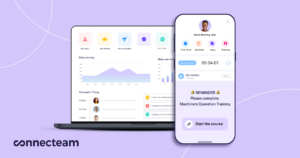
Connecteam earns 4.9/5 on the App Store because it was built for deskless workers from the ground up. Scheduling, time tracking, communication, tasks, training, and basic HR live in one mobile app. The free plan covers up to 10 users with full features and no time limit. The three-hub pricing model triples costs if you need everything ($87/month minimum at Basic for all hubs), and native integrations are limited. For businesses with 10 to 200 frontline employees in field services, healthcare, hospitality, or retail, it is the top pick.
- Starting at
- $29/month per hub (annual billing, first 30 users included); free plan available for up to 10 users
- Founded
- 2014
- HQ
- Tel Aviv, Israel
- Model
- Tiered
What's great
- Exceptional mobile app quality (4.9/5 App Store, 4.8/5 Google Play) purpose-built for deskless workers
- Genuinely generous free plan with full features for up to 10 users, no time limit
- Broad feature set covering scheduling, time tracking, communication, tasks, training, and HR in one platform
- Supports 90+ languages, making it highly effective for multilingual and international workforces
What's not
- Three-hub pricing model triples costs for businesses needing the full suite (e.g., $87/month minimum for all hubs at Basic)
- Key features like geofencing, live GPS, Zapier integration, and API access are locked behind higher-priced tiers
- Limited native integrations compared to competitors; broader connectivity requires Zapier (Advanced plan+) or Enterprise API
- No native offline functionality, requiring stable internet for all core features
UKG Pro
UKG Pro processes payroll across 160+ countries and 120+ currencies with real-time US tax compliance, making it the strongest global payroll engine in our analysis. The all-in-one HCM suite covers HR, talent, time, scheduling, and analytics. Mobile apps rate 4.7/5 on iOS. Implementation typically takes 4 to 12 months with fees running 30-70% of annual software cost, and support quality is inconsistent. Best for organizations with 350+ employees and complex, multi-country workforce needs.
- Starting at
- Contact vendor for pricing (third-party sources estimate $27-37/employee/month)
- Founded
- 2020 (merger of Ultimate Software, est. 1990, and Kronos, est. 1977)
- HQ
- Lowell, MA / Weston, FL
- Model
- Per User
What's great
- Industry-leading payroll engine with real-time U.S. tax compliance and global payroll across 160+ countries and 120+ currencies
- Comprehensive all-in-one HCM covering HR, payroll, talent management, time and attendance, scheduling, and analytics in a single platform
- Modern, intuitive employee self-service portal with strong mobile apps (4.7/5 iOS, 4.3/5 Android)
- AI-driven insights through UKG Bryte, powered by Great Place To Work data and Google VertexAI, for retention and engagement analytics
What's not
- No transparent pricing; requires contacting sales for a custom quote, making early-stage budget planning difficult
- Lengthy and complex implementation process, typically 4-12 months, with substantial one-time implementation fees (30-70% of annual software cost)
- Customer support quality is inconsistent; response times for complex issues and configuration changes can be slow
- Admin-facing reporting and analytics tools have a steep learning curve and are not as intuitive as some competitors

Zoho People
Zoho People starts at $1.25/user/month and includes a free tier for up to 5 users. That alone makes it remarkable. Higher tiers add performance management, LMS, compensation management, and an HR help desk, all under $5/user/month. Deep integration with the Zoho ecosystem (CRM, Payroll, Recruit, Books, and 50+ other products) is a major advantage for existing Zoho shops. Customer support is slow, the mobile app lags (3.3/5 on Google Play), and payroll requires a separate Zoho Payroll subscription. But for the price, nothing else comes close on features.
- Starting at
- $1.25/user/month (annual billing)
- Founded
- 1996
- HQ
- Chennai, India (US office: Austin, Texas)
- Model
- Per User
What's great
- Exceptional price-to-feature ratio, with paid plans starting at $1.25/user/month and a free tier for up to 5 users
- Broad feature set including performance management, LMS, compensation management, and HR help desk across higher tiers
- Deep integration with the Zoho ecosystem (CRM, Payroll, Recruit, Books, Expense, and 50+ other Zoho products)
- Highly customizable workflows and automation using Deluge scripting language
What's not
- Customer support is slow and difficult to escalate; only 24/5 email support is included on standard plans
- Mobile app is outdated, laggy, and missing advanced features available in the web version (3.3/5 on Google Play)
- No built-in payroll or recruiting; requires separate Zoho Payroll and Zoho Recruit integrations
- Key features like attendance tracking, performance management, and LMS are locked behind progressively higher pricing tiers
Justworks
Justworks is one of the few PEO providers that publishes its pricing: $50/month plus $8/employee/month for standalone payroll, or $79/employee/month for the PEO Basic plan. The interface is clean enough that business owners with no HR background can run it. Multi-state compliance handling across all 50 US states is automatic. No performance management, no LMS, no ATS, and no volume discounts mean growing companies should plan a transition before 100 employees. For small teams of 5 to 50 that need payroll, benefits, and compliance without a dedicated HR person, it is an excellent choice.
- Starting at
- $50/month + $8/employee/month (Payroll); $79/employee/month (PEO Basic)
- Founded
- 2012
- HQ
- New York, NY
- Model
- Per User
What's great
- Transparent, publicly listed pricing with no hidden fees, which is rare among PEO providers
- Intuitive, modern interface that requires minimal training for both admins and employees
- Strong multi-state compliance handling that automates tax obligations across all 50 US states
- Access to large-group health insurance rates that small businesses cannot typically obtain independently
What's not
- No performance management, learning management, or applicant tracking modules built in
- Limited reporting and analytics capabilities; full insights restricted to Plus plan with no historical data migration
- No public API available, constraining custom integration options
- Per-employee pricing without volume discounts becomes expensive as headcount grows beyond 50
Dayforce
Dayforce's real-time continuous payroll calculation engine provides up-to-the-minute labor cost visibility, which batch-based competitors simply cannot match. The true single-application architecture eliminates data silos across HR, payroll, and workforce management. Scheduling and time tools are purpose-built for shift-heavy industries like healthcare, retail, and manufacturing. Implementation runs $50,000 to $120,000+ and typically takes 4 to 6 months. For mid-to-large organizations (350-10,000 employees) in compliance-sensitive, shift-heavy industries, it is a top-tier option.
- Starting at
- Contact vendor for pricing (third-party estimates suggest $22-$31 PEPM for core HCM/payroll)
- Founded
- 1992
- HQ
- Toronto, Ontario and Minneapolis, Minnesota
- Model
- Custom
What's great
- True single-application architecture with a unified data model eliminates data silos and manual reconciliation between HR, payroll, and workforce management
- Real-time continuous payroll calculation engine provides up-to-the-minute labor cost visibility, unlike batch-based competitors
- Comprehensive workforce management with strong scheduling, time and attendance, and labor compliance tools suited for shift-heavy industries
- Global payroll coverage in 200+ countries (20+ natively, the rest via partners) with multi-language support in 20+ languages
What's not
- Implementation is expensive ($50,000-$120,000+), typically takes 4-6 months, and frequently involves more client-side burden than expected
- Customer support response times are slow, especially for non-critical tickets, and support outside North America is notably weaker
- Reporting tools are powerful but require technical skill to use effectively; the interface changes periodically, forcing re-learning
- High total cost of ownership places it beyond reach for smaller organizations; annual contracts often exceed $200,000 for midsize companies
Personio
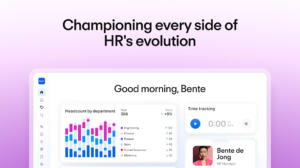
Personio is the strongest all-in-one HR platform for European SMEs, particularly in Germany, Austria, and Switzerland. Its deep DATEV integration handles German payroll natively, and the recruiting-to-offboarding coverage reduces vendor sprawl. The interface is clean and requires minimal training. Native payroll only works for Germany; all other countries need external integrations. Pricing is opaque with reports of frequent increases and features being unbundled into paid add-ons. For European companies with 10 to 500 employees, it remains the platform to beat in the DACH region.
- Starting at
- Contact vendor for pricing
- Founded
- 2015
- HQ
- Munich, Germany
- Model
- Per User
What's great
- Intuitive, clean interface that requires minimal training for both HR teams and employees
- Comprehensive all-in-one platform covering the full employee lifecycle from recruiting to offboarding
- Strong European compliance focus with deep DATEV integration for German payroll
- 200+ integrations covering payroll, collaboration, identity, and more through a well-organized marketplace
What's not
- Native payroll only available for Germany; all other countries require external payroll integrations
- Opaque pricing with no published rates, frequent price increases, and features being unbundled into paid add-ons
- Mobile app is very limited, supporting only basic time tracking, absence requests, and profile viewing
- Reporting and analytics lack depth for companies needing advanced or custom analysis
ADP Workforce Now
ADP Workforce Now processes payroll backed by decades of tax expertise and 42 million employee records. Its AI-powered anomaly detection catches errors before they hit paychecks, and its compensation benchmarking dataset is the largest in the industry. The single-database architecture eliminates re-entry across payroll, HR, benefits, and time modules. Customer support quality is inconsistent (frequent account manager turnover), add-ons push costs to $35-40/employee/month, and performance management is underdeveloped. For mid-sized companies (50-1,000 employees) where payroll accuracy is the top priority, ADP's depth of data is unmatched.
- Starting at
- Contact vendor for pricing (estimated ~$19/employee/month for Select tier based on third-party sources)
- Founded
- 1949
- HQ
- Roseland, New Jersey
- Model
- Per User
What's great
- Industry-leading payroll processing with AI-powered anomaly detection and tax compliance backed by decades of expertise and 42 million employee records
- Compensation benchmarking draws from the largest real-world payroll dataset in the industry, offering data-driven insights no smaller competitor can match
- Single-database architecture eliminates manual data re-entry across payroll, HR, benefits, and time tracking modules
- Extensive integration ecosystem with 700+ prebuilt connectors on ADP Marketplace and RESTful APIs for custom development
What's not
- Customer support quality is inconsistent, with frequent account manager turnover and slow response times, especially for smaller clients
- Performance management module is underdeveloped, lacking 360-degree feedback and offering limited customization for review workflows
- Opaque pricing with no published rates; add-on modules can push costs to $35-$40 per employee per month, undermining the 'all-in-one' value proposition
- Limited customization for workflows, reports, and interface elements compared to more flexible competitors
Darwinbox
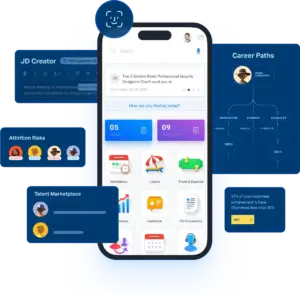
Darwinbox offers a compelling alternative to Workday and SAP for organizations in Asia-Pacific at a lower total cost of ownership. Its AI capabilities (HR Voicebot, OCR, automated resume screening) meaningfully reduce manual HR workload, and the mobile-first design handles attendance, leave, payslips, and approvals natively on Android and iOS. The third-party integration ecosystem is less extensive than Western incumbents, and report customization is limited with slow load times on large datasets. For enterprises with 500 to 10,000 employees with APAC operations, it is the strongest regionally focused HCM platform we analyzed.
- Starting at
- Contact vendor for pricing
- Founded
- 2015
- HQ
- Singapore
- Model
- Custom
What's great
- Comprehensive end-to-end HCM suite covering recruitment, payroll, attendance, performance, engagement, and analytics in a single platform
- Strong AI capabilities including Darwinbox Sense, HR Voicebot, OCR, and automated resume screening that reduce manual HR workload significantly
- Mobile-first design with native Android and iOS apps that handle attendance, leave, payslips, approvals, and more
- Lower total cost of ownership compared to Oracle, SAP, and Workday with significantly faster implementation timelines (as quick as 2-4 weeks)
What's not
- No transparent pricing; all quotes are custom, making it difficult to budget or compare costs without engaging sales
- Report customization is limited and complex reports suffer from slow load times, especially with large datasets
- Third-party integration ecosystem is less extensive than Oracle, SAP, or Workday; niche tool integrations may require custom API work
- Mobile app, while functional, is slower and less polished than the desktop experience
How We Evaluated
We analyzed 157 HRMS products using vendor documentation, published feature lists, pricing disclosures (where available), and user feedback patterns aggregated across major review platforms. We did not conduct hands-on testing of every product. Our editorial ratings weight real user experience patterns, pricing transparency, feature depth relative to target audience, and market positioning. Products with fewer than five independent user reviews received a confidence penalty. This page was last updated in April 2026.
Common Questions
Straight answers to what buyers ask us.
-
Prices range from $1.25/user/month (Zoho People) to $30+/user/month (UKG Pro, Dayforce) for mid-market platforms. Enterprise platforms like Workday do not publish pricing but routinely reach seven figures in total cost when you factor in implementation. Budget for the base platform plus add-ons; we found that add-on modules (payroll, time tracking, benefits) can inflate costs 30-50% beyond the listed price.
-
HRIS (Human Resource Information System) focuses on employee records and basic administration. HRMS (Human Resource Management System) adds payroll and workforce management. HCM (Human Capital Management) is the broadest term, covering talent management, analytics, and strategic planning. In practice, most modern platforms blend these categories. Focus on what the software actually does rather than how the vendor labels it.
-
You do not strictly need it, but it pays off faster than most small businesses expect. If you are spending more than two hours per week on payroll, time-off tracking, or onboarding paperwork, a platform like OnPay ($49/month + $6/employee) or Zoho People ($1.25/user/month) will recoup its cost within a few pay cycles. Several platforms, including Zoho People and Connecteam, offer free tiers for very small teams.
-
Connecteam offers the most capable free plan: full features for up to 10 users with no time limit. Zoho People provides a free tier for up to 5 users. For open-source flexibility, OrangeHRM's Starter plan includes performance management, recruitment, and leave tracking at no cost. Each of these has real limitations, but they are genuinely functional starting points, not crippled trials.
-
For small business platforms (OnPay, BambooHR, Connecteam), expect 1 to 5 days. Mid-market platforms (Rippling, Paycom, HiBob) typically take 4 to 8 weeks with guided setup. Enterprise platforms (Workday, UKG Pro, Dayforce) require 4 to 12 months and often involve third-party implementation partners at significant additional cost. The biggest variable is data migration from your existing systems.
-
Yes, but plan for friction. Most platforms allow data export in CSV or Excel format, and many vendors offer guided data migration as part of implementation. The pain points are usually custom fields, historical payroll records, and benefits enrollment data that do not map cleanly between systems. Ask your new vendor specifically about data migration support before signing; some include it free while others charge thousands.
-
For companies under 500 employees, all-in-one platforms (Rippling, Paycom, BambooHR) almost always win on simplicity and total cost. Maintaining integrations between five separate HR tools creates real operational risk and hidden costs. Above 500 employees, best-of-breed tools start to make more sense for specialized functions like employee engagement (Qualtrics XM) or pay equity (Syndio), layered on top of a core HCM platform.